
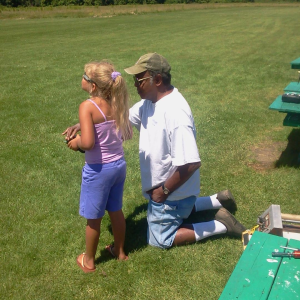
AMA member Clarence Ragland is a longtime member of the model aviation community. Throughout his time in the hobby, he's created a teaching method to assist with recruitment and retention in model aviation: the Ragland Technique (RT). Clarence shared the following information about his methodical creation:
"The radio-controlled aviation industry stands at a pivotal crossroads. While technology has made aircraft more accessible than ever, the traditional 'barrier to entry'—learning to fly without the fear of a costly crash—remains a significant hurdle. I am writing to introduce you to the RT, a streamlined instructional methodology designed to catalyze mass participation and rapid growth within the hobby and industry. The RT, or Kinesthetic Instruction Technique (KIT), can be used with or without a buddy box. Using a buddy box is how I learned how to use the KIT.
The Core Innovation: Tactile Guidance
The RT addresses the primary flaw of traditional 'buddy box' or verbal instruction: the disconnect between a student's motor actions and an instructor's verbal commands. In high-pressure situations, students often 'wriggle' the sticks or freeze. The RT bypasses this by using direct tactile feedback. By placing the thumb and forefinger under the student's thumb on the primary control levers, the instructor provides:
- Instant Muscle Memory: The student feels the exact pressure and displacement required for smooth flight
- Immediate Correction: Over-corrections are physically dampened before they result in a stall or dive
- Calm Communication: The need for frantic verbal shouting is replaced by subtle physical cues
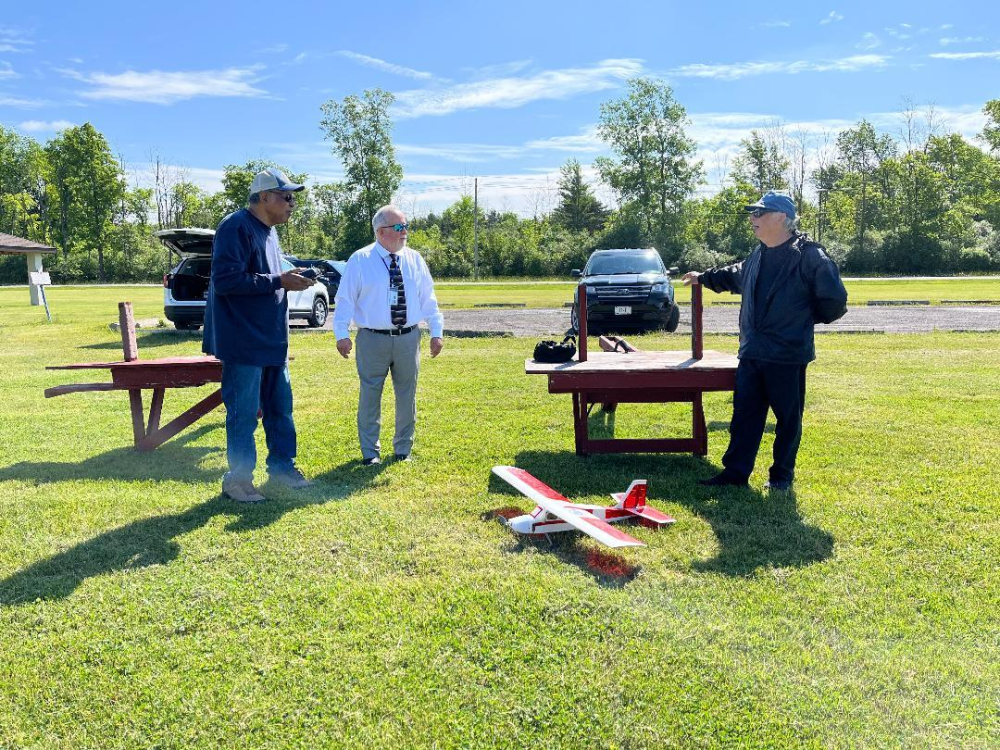
Scalability and Industry Impact
The strength of the RT lies in its speed and versatility. It is not just for the flying field; it is a bridge to total competency:
- Simulation Mastery in Minutes: I have proven that a student can be taught to fly—and, more importantly, taught how to teach—on an RC flight simulator within approximately one hour. This rapid turnaround allows for high-volume training environments.
- Educational Integration: Because the RT is easy to replicate, schoolteachers can implement it in STEM programs. This creates a pipeline of young enthusiasts who are proficient pilots before they even step onto a physical runway.
- Club Revitalization: Traditional clubs often struggle with 'gatekeeping' or slow training cycles. The RT allows clubs to onboard new members quickly, with or without complex buddy-box hardware, ensuring a more welcoming and successful entry point for beginners.
Why This Matters Now
To achieve mass growth, we must move away from the 'trial by fire' mentality. By implementing the RT, we can reduce the 'dropout rate' of new hobbyists who quit after their first crash. We have the opportunity to transform RC flying from a niche pastime into a mainstream educational and recreational powerhouse."
Thank you, Clarence, for sharing how you've approached growing your local community's participation in model aviation!


